

For decades, getting a book published meant one thing: convincing a traditional publisher to take a chance on your manuscript. That gatekeeping model is crumbling. In 2026, self-publishing is no longer a last resort, it is a strategic choice that gives authors more control, higher royalties, and a faster path to readers.
We have helped hundreds of authors navigate this landscape, and these are the trends shaping the year ahead, along with what each one means for the book you are about to publish.
The State of Publishing in 2026: Everything Has Changed
The stigma around self-publishing has disappeared. Bestsellers like Andy Weir with The Martian and Hugh Howey with Wool proved that indie authors can compete with, and beat, traditionally published books. Today many successful authors choose self-publishing as their first option because they keep full creative control, earn several times more per copy, publish on their own timeline, own their rights, and build a direct relationship with their readers.
If you are still weighing your options, our guide to self-publishing versus traditional publishing breaks the decision down for a first book.
The bodies that track the industry, including the Authors Guild, report steady growth in indie author income year on year.
Trend 1: Self-Publishing Is No Longer a Last Resort
For years, self-publishing was the option you took when the industry said no. That perception has reversed completely. In 2026 authors choose it first for concrete reasons, not out of frustration.
- They keep full creative control over content, cover and pricing
- They earn three to five times more per book sold
- They publish on their own schedule, not an 18 to 24 month queue
- They own their rights and can adapt their work into other media
- They build a direct relationship with their readers
The authors who win treat self-publishing as a business, not a hobby. They invest in professional editing, cover design and marketing, and they reap the rewards.
Trend 2: AI Tools Are Built Into Publishing Workflows
AI has entered every stage of the process. Authors now use it for developmental feedback, to visualise cover concepts before hiring a designer, to draft blurbs and ad copy, and to produce narration for audiobooks. Used well, it removes hours of grunt work.
But AI is a tool, not a replacement. The strongest authors of 2026 use it for speed while keeping human judgement at the centre of every creative decision. A machine can catch a grammar slip; it cannot tell you that your protagonist's motivation falls flat in chapter seven. That is why our book publishing services pair smart tools with human editors and designers.
Trend 3: Hybrid Publishing Goes Mainstream
Hybrid publishing sits between traditional and self-publishing. You pay for professional services but keep your rights and earn higher royalties. In 2026 it is a mainstream choice: professional quality without the gatekeeping, the same distribution channels as traditional publishers, and a faster timeline, with most hybrid books out in three to six months.
The catch is choosing a reputable partner. Watch for vanity presses that charge large fees without delivering real distribution or marketing. Our checklist of red flags before you hire a publishing company shows you exactly what to look for.
Trend 4: Audiobooks Are No Longer Optional
The audiobook market is booming. Just as almost every print book now has an ebook edition, every book can now have an audio edition. Audiobook listeners tend to buy more books than print-only readers, and platforms like Audible, ACX and Findaway Voices make distribution straightforward. AI narration has cut production costs sharply, putting audio within reach of authors who could never have afforded a studio.
If you are not offering an audio version, you are leaving money on the table.
Trend 5: BookTok and Social Media Drive Discovery
TikTok's BookTok community has become the most powerful book discovery engine in the world, driving billions of views and millions of sales. Authors who build an audience before publishing hold a real advantage, and traditional publishers now scout the platform for new talent.
The authors who succeed treat social media as a core part of their strategy, not an afterthought. Our complete BookTok marketing guide for 2026 shows you how to turn views into sales.
Trend 6: Print-on-Demand Removes Inventory Risk
Print-on-demand has matured. Quality now rivals traditional offset printing, and you print copies only when they are ordered. That means zero inventory risk, multiple formats from paperback to hardcover to large print, global distribution through Amazon and IngramSpark, and instant updates without warehousing costs. You can test the market, refine your cover and content, and scale as demand grows, all without a garage full of unsold stock.
Trend 7: Direct-to-Reader Marketing and Newsletters
The most successful indie authors build direct relationships with their readers. Email newsletters, in particular, have become a cornerstone of author marketing. An email list is an owned asset, unlike social followers who are at the mercy of an algorithm, and subscribers are far more likely to buy. Launch sequences sent by email consistently outperform social announcements, and direct sales let authors keep more of every dollar.
How to Self-Publish Your Book in 2026
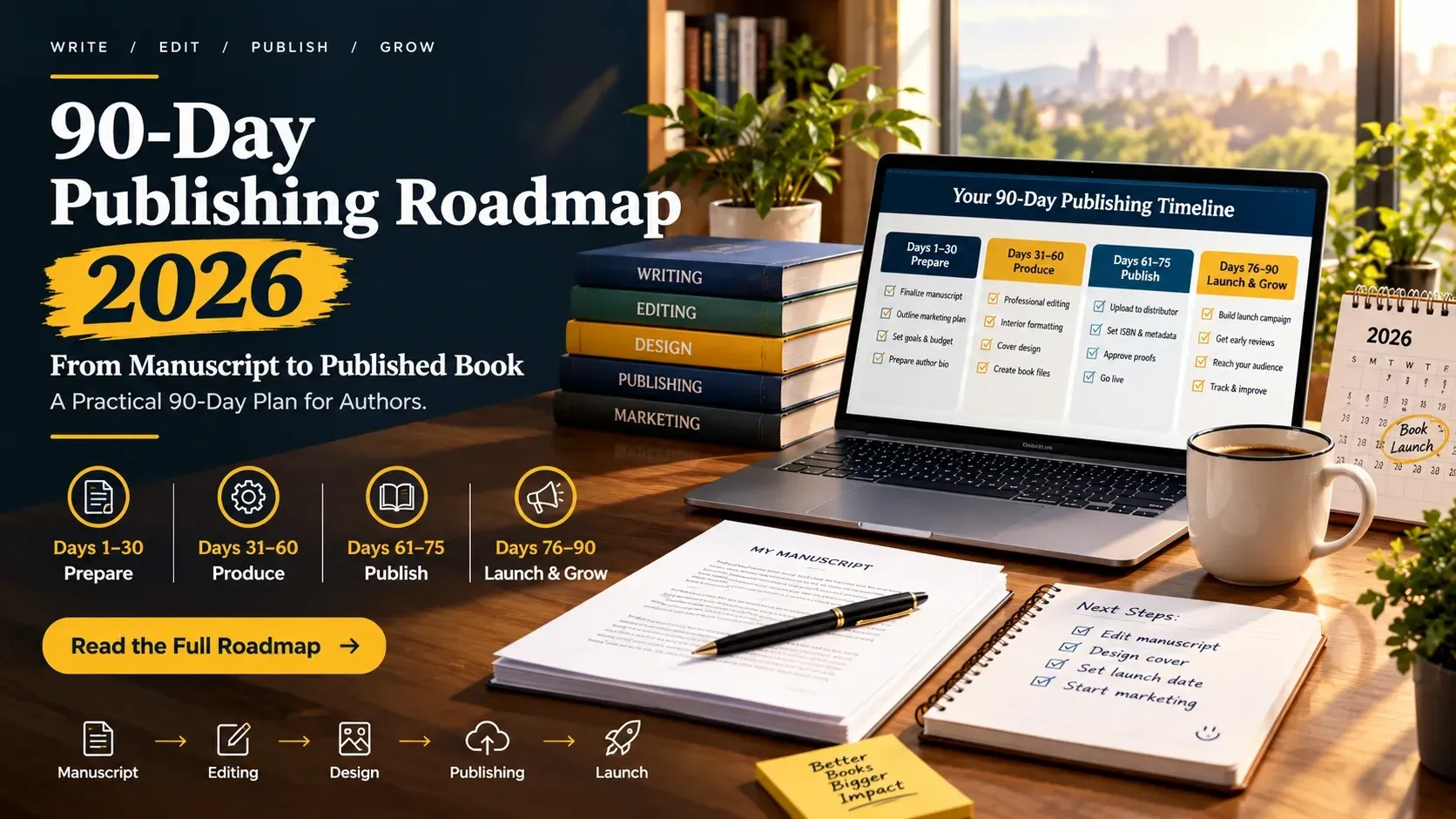
The trends are encouraging, but a plan is what turns them into a finished book. Here is the path we walk every author through, and if you want the week-by-week version, follow our 90-day publishing roadmap.
- Finish and edit your manuscript with a professional editor
- Commission a professional, genre-aware cover
- Format for ebook and print with the right tools
- Set up distribution through Amazon KDP, IngramSpark or Draft2Digital
- Build a launch plan around your email list, BookTok and a launch team
Two of those steps decide first impressions more than any other: editing and the cover. A strong book cover design earns the click, and clean editing keeps the reader.
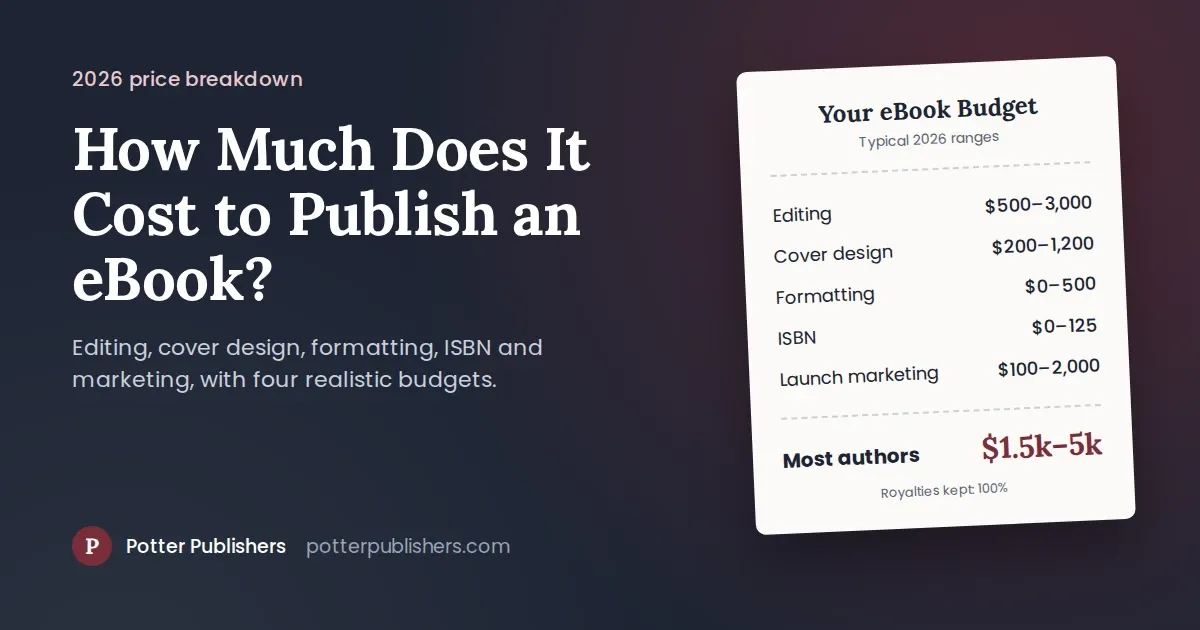
Budget matters too, so it helps to know what it really costs to publish before you start.
Self-Publishing vs Traditional Publishing: 2026 at a Glance
| Factor | Self-Publishing | Traditional Publishing |
|---|---|---|
| Royalties | Up to 70% | 10 to 15% |
| Timeline | 1 to 3 months | 18 to 24 months |
| Creative control | Full control | Publisher decides |
| Marketing | Author led | Publisher supported on select titles |
| Prestige | Growing acceptance | Still holds cultural cachet |
| Upfront cost | Author invests | Publisher invests |
Frequently Asked Questions
How much does it cost to self-publish a book in 2026?
It ranges from a few hundred dollars for a DIY approach to several thousand for a full professional package covering editing, design and marketing. The right figure depends on the quality you want and how much you do yourself.
Can self-published authors make a living?
Yes. Median income for self-published authors has grown steadily, and top indie authors earn six and seven figures a year. Success comes from quality, consistency and marketing, not a single lucky book.
Do I need an agent to self-publish?
No. An agent is only needed for traditional publishing submissions. Many authors in 2026 skip agents entirely and build successful careers through direct publishing.
How long does it take to self-publish?
With professional support, most books can be published in one to three months, depending on length, editing needs and the design process.