Ask ten editors what it costs to edit a book and you will get ten different numbers. That is not evasion: the price genuinely depends on the manuscript in front of them. This guide explains what drives the cost so you can budget sensibly and compare quotes fairly.
At Potter Publishers, editing is the question authors ask us about most, usually in the form "what will it cost?". Our editors work with authors across Australia and the United States, and the honest answer always starts with the manuscript itself. Below is how we think about it, and how you can plan your own book editing budget.
The type of edit matters most
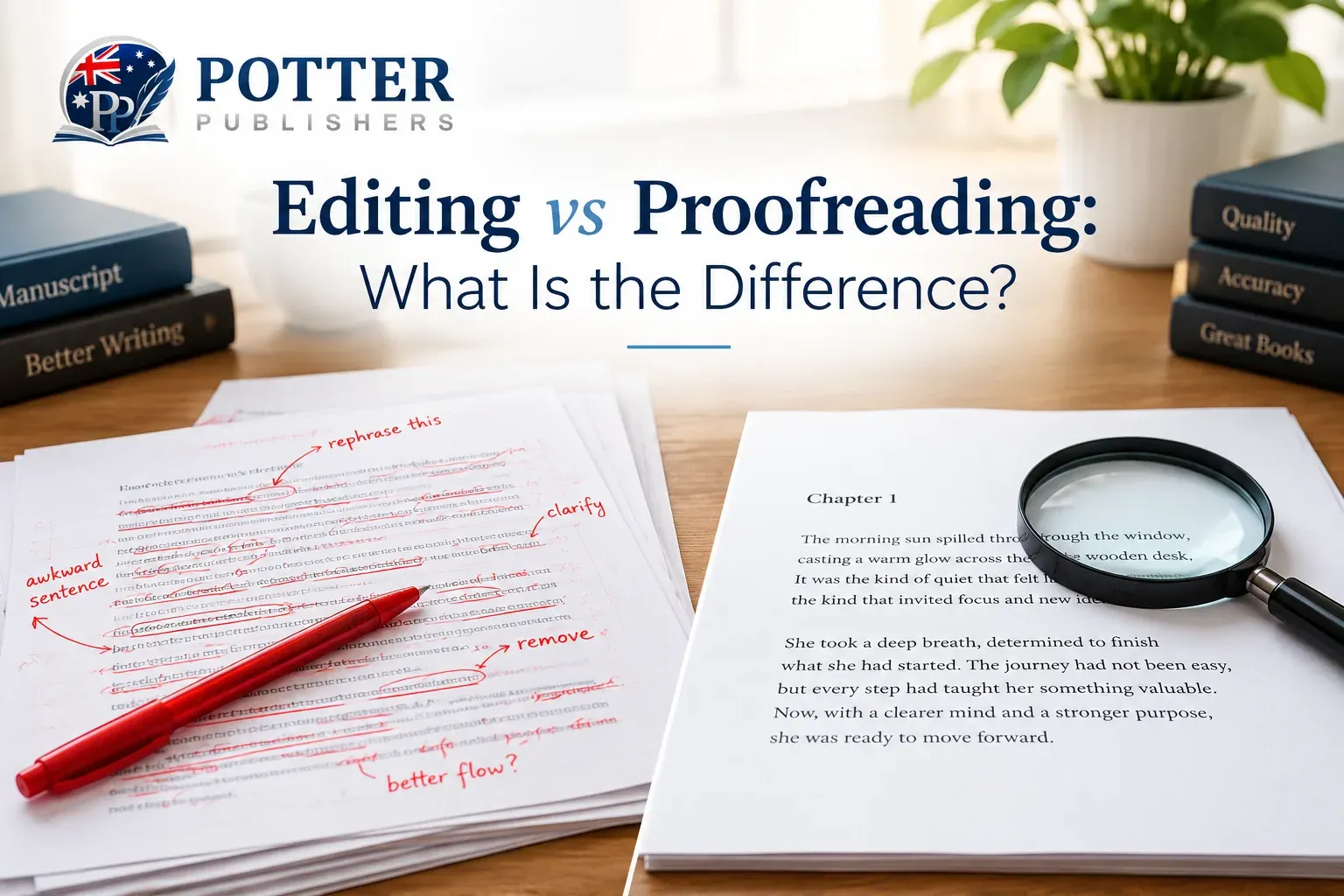
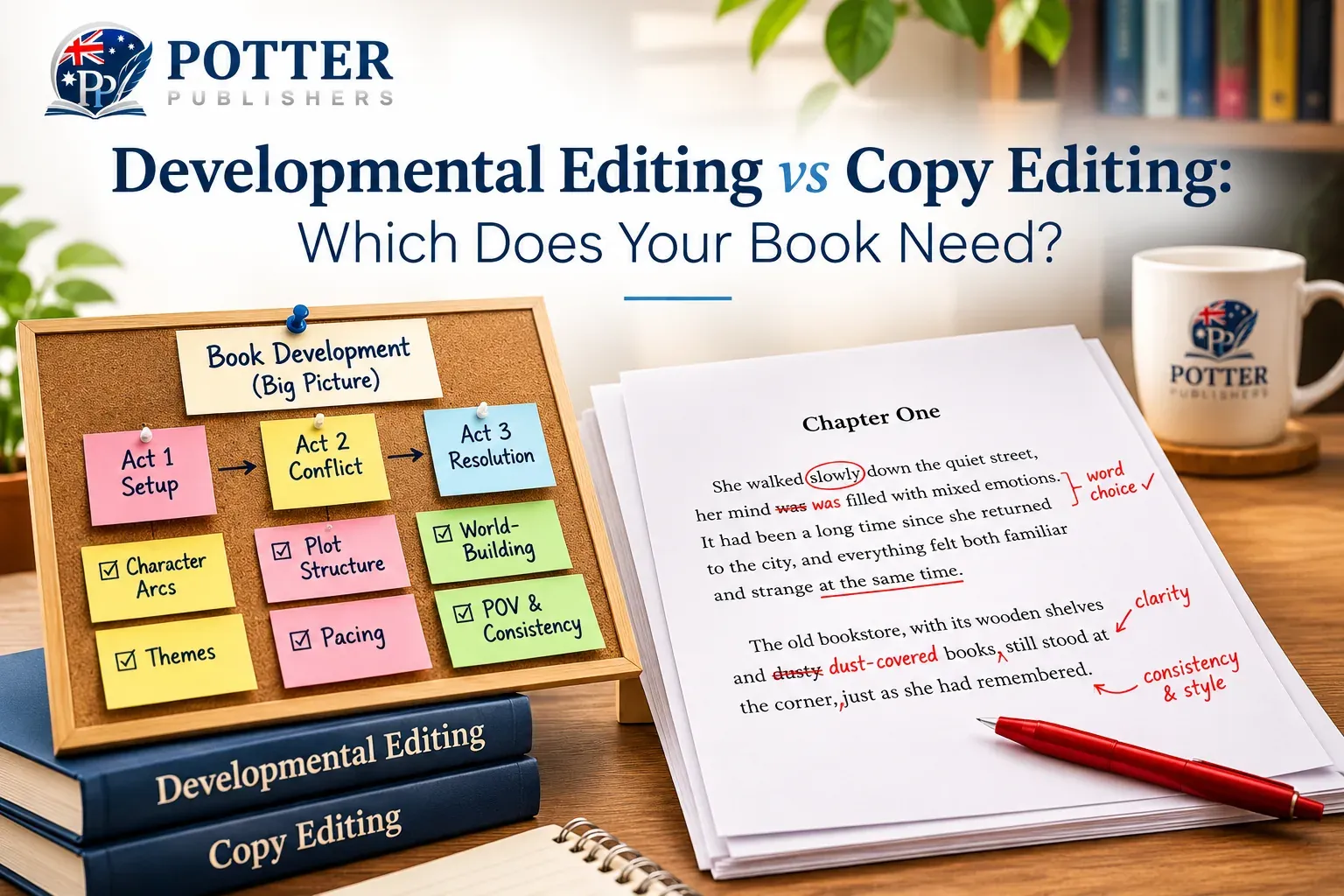
Editing happens in stages, and each stage is priced differently. A developmental edit looks at structure, plot or argument and pacing, and is usually the most involved. A line edit works on sentences, rhythm and clarity. A copy edit corrects grammar, punctuation and consistency. Proofreading is the final check after formatting and is normally the lightest.
The most common budgeting mistake is paying for a polished copy edit on a draft that still needs structural work. Much of that carefully corrected text will be rewritten, so the money is wasted. A manuscript assessment tells you which stage your draft needs first.
What else affects the price
- Word count. Longer books take longer to edit.
- The condition of the draft. A clean manuscript is quicker than one with frequent errors.
- Genre and specialist content. Technical, academic or heavily referenced books need more checking.
- Turnaround. Tight deadlines can affect scheduling and cost.
- Extras. Editorial letters, style sheets and follow-up questions may or may not be included.
How editors usually charge
Editors commonly quote per word, per page, per hour or as a flat project fee. A per-word or project quote is easiest to compare, because you know the total up front. Whatever the model, ask exactly what is included: how many passes, whether you can ask questions afterwards, and whether a style sheet is part of the job.
How to compare quotes
Compare like with like. A low quote for "editing" may be a light proofread, while a higher one may include a full line edit and editorial letter. Ask for a short sample edit of a few pages so you can see the editor's approach before you commit.
Why two quotes for the same book can look so different
Imagine two authors with 80,000-word novels. The first has revised several times, worked with beta readers and fixed the obvious problems; the second has a fast first draft. Both ask for "an edit". An honest editor will quote the second manuscript higher, because it needs more time per page, and may recommend a developmental edit before any line work at all. The word count is the same; the job is not.
The same applies across genres. A straightforward contemporary novel moves faster than a fantasy with invented names and a complex timeline, which in turn moves faster than a referenced history book where every citation must be checked. When you compare quotes, compare the work being offered, not just the total.
A sample edit is the best value check
Most professional editors are happy to edit a short sample, often the first few pages. A sample shows you three things a price list cannot: how deeply the editor works, whether their suggestions improve your writing without flattening your voice, and how clearly they explain their changes. If two editors quote similar amounts, the sample usually makes the decision easy.
Ways to make editing more affordable
- Self-edit first. Read the manuscript aloud, cut repetition and fix what you already know is wrong. You pay less for a cleaner draft.
- Use beta readers before a developmental edit. They can tell you where readers lose interest, so the editor starts from a clearer brief.
- Do the stages in order. Structural work first, polishing last, so you never pay to correct sentences that will be cut.
- Start with an assessment. A diagnostic report is a smaller investment that tells you where to spend the rest.
- Keep a style sheet. Decisions on names, spelling and numbers save time at the copy edit and proofread.
What not to cut
If budget is tight, it is tempting to skip a stage. Skipping the final proofread is the most common false economy: formatting introduces errors of its own, and readers notice typos on the printed page. If you must choose, prioritise the stage that addresses your manuscript's biggest weakness, and keep at least one professional pass on the finished file.
Questions to ask before you hire an editor
- Which editorial stage are you quoting for, and what exactly does it include?
- How many passes will you make through the manuscript?
- Will I receive tracked changes, comments, an editorial letter or a style sheet?
- Can I ask follow-up questions after the edit, and is that included?
- What is the delivery date, and what happens if my draft arrives late?
Budgeting for editing as part of the whole book
Editing is one line in a wider publishing budget that may also include cover design, formatting, ISBNs, printing, an audiobook and marketing. It helps to plan the whole budget at once, so you do not spend everything on one stage and run short at the end. A useful approach is to list every stage your book needs, get a quote for each, and then decide where your money will make the most difference for this particular manuscript.
For most books, editing deserves a significant share. Readers forgive a simple cover more readily than a book full of errors or a story that loses its way, and a well-edited manuscript also makes the later stages smoother: fewer corrections at the proof stage, fewer surprises in layout.
How to read an editing quote
A clear quote should tell you the editorial stage, the word count it is based on, what you will receive, how many passes are included, the delivery date and the payment terms. If any of these are missing, ask. A quote that simply says "editing" with a total is hard to compare and easy to misunderstand on both sides.
Watch for wording such as "light edit" or "full edit" without explanation. Ask what each means in practice: does a light edit correct only obvious errors, or does it also address sentence flow? Does a full edit include structural feedback? The answers often explain why two quotes differ.
When a higher quote is the better deal
A higher quote can be better value if it includes an editorial letter, a style sheet, follow-up questions and an editor with real experience in your genre. Cheaper editing that misses structural problems can cost more in the end, because you may need a second editor to fix what the first one did not address.
How Potter Publishers can help
We start by assessing your manuscript and recommending the editorial stage it actually needs, then send a written quote. See our book editing services, developmental editing and proofreading pages.
Related reading
- Editing vs proofreading
- Developmental editing vs copy editing
- How long book editing takes
- What it costs to publish an ebook
Questions and next steps
Do I need every stage of editing? Not always. Some manuscripts need a developmental edit first; others are ready for a copy edit. An assessment tells you which.
Can I edit my own book to save money? Self-editing is valuable, but a professional brings fresh eyes. Many authors self-edit first, then pay for the stage they cannot do themselves.
Ready for a quote? Tell us about your manuscript.
Is it cheaper to edit a shorter book? Usually, because fewer words take less time, but a short book in poor condition can cost more than a longer, cleaner one.
Should I pay the whole fee up front? Many editors take a deposit and the balance on delivery. Agree the payment terms in writing before work starts.
Potter Publishers sends every author a written quote after reviewing the manuscript, so you know the stage, the deliverables and the delivery date before you commit. Request your editing quote.