
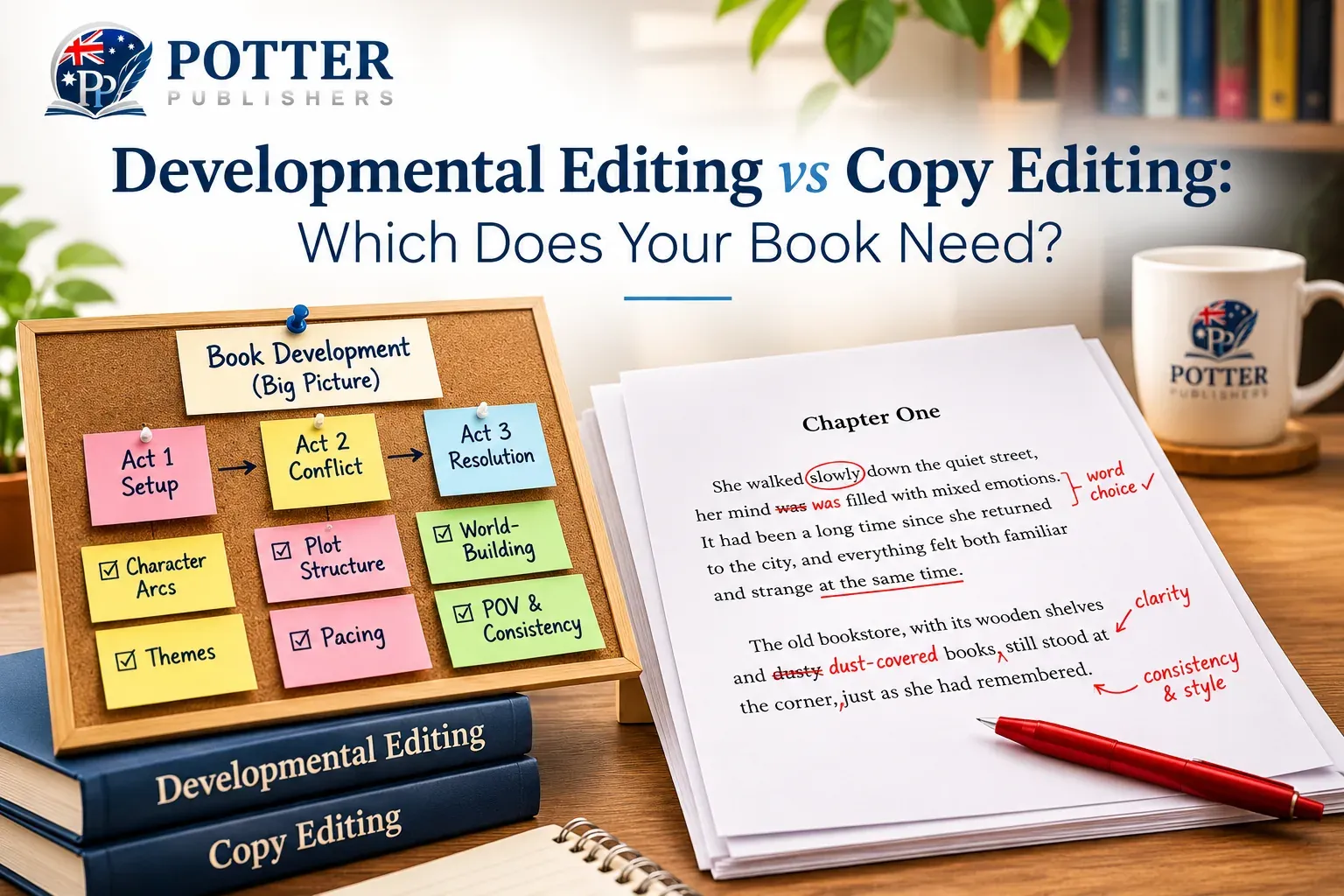
Developmental editing and copy editing sit at opposite ends of the editorial process. Knowing the difference helps you spend your editing budget where it will make the biggest difference.
Potter Publishers offers both developmental editing and copy editing, and one of the most useful things we do for authors is explain which one their manuscript needs first. This guide shares the approach our editors use.
Developmental editing: the big picture
A developmental editor reads the whole manuscript and asks whether it works as a book. In fiction that means plot, pacing, character development, point of view and whether the ending pays off the setup. In nonfiction it means the argument, the structure of chapters and whether each one earns its place. You usually receive an editorial report and margin notes, and then you revise.
Copy editing: the details
A copy editor works at sentence level for correctness and consistency: grammar, punctuation, spelling, capitalisation, number style, and whether names, dates and terms match throughout. Decisions are recorded in a style sheet, which then guides the proofreader.
How to tell which you need
- Beta readers lose interest, or you are unsure the structure works: start with developmental editing.
- Readers enjoy the book but notice errors and inconsistencies: you need copy editing.
- You are not sure: a manuscript assessment will tell you.
Do you need both?
Many books do, in that order. Developmental editing first, so the structure is settled, then a line edit if the prose needs polish, then copy editing. Doing the copy edit first means correcting sentences that may later be cut.
What a developmental edit looks like in practice
After reading the whole manuscript, a developmental editor typically writes an editorial letter. It summarises what is working, then sets out the main issues in order of importance: perhaps the story takes too long to start, a subplot never connects to the main plot, or a nonfiction book introduces its key idea three chapters too late. Margin notes then point to the exact places in the text, with suggestions rather than rewrites.
The output is a revision plan. The author does the rewriting, sometimes followed by a second, shorter developmental read to check the changes worked.
What a copy edit looks like in practice
A copy edit returns the manuscript with tracked changes throughout: corrected punctuation, consistent hyphenation, standardised numbers, fixed grammar, and queries where something is unclear or possibly wrong. Alongside it comes a style sheet listing every decision, from how a character's name is spelled to whether the book uses "towards" or "toward".
Where line editing fits
Between the two sits line editing, which works on the quality of sentences: rhythm, word choice, clarity, tone and flow. Some editors combine line and copy editing in one pass; others keep them separate. When you compare quotes, check whether "copy editing" includes line-level work or only correctness.
Common mistakes authors make
- Skipping the developmental stage because the prose already feels polished. Beautiful sentences cannot rescue a structure that does not work.
- Copy editing too early, then rewriting chapters afterwards and paying for a second copy edit.
- Treating editorial notes as orders. A developmental editor advises; you decide what serves your book.
- Not budgeting time to revise between the developmental edit and the copy edit.
A simple way to decide
Ask yourself one question: if a reader finished the book, would their main complaint be about the story or argument, or about errors and inconsistencies? If it is the story or argument, start with developmental editing. If it is errors, start with copy editing. If you genuinely cannot tell, an assessment is the right first step.
What to send your editor
For a developmental edit, send the complete manuscript along with a short note covering the genre, your intended readers, a brief summary of what the book is about, and any concerns you already have. A one-page synopsis can help the editor understand your intentions. For a copy edit, send the revised manuscript, any style preferences you already have (such as Australian or US spelling), and notes on names or terms that should be spelled a particular way.
How to respond to editorial feedback
Developmental feedback can be challenging to read, especially on a book you care about. It helps to read the editorial letter once, set it aside for a day or two, then return to it with a plan. Start with the largest structural issues, because fixing them often resolves smaller ones. You do not have to accept every suggestion, but if an editor flags a problem, take it seriously even if you solve it differently.
With a copy edit, work through the tracked changes steadily. Accept what you agree with, reject what you do not, and answer every query. Resist rewriting large passages at this stage, because that can introduce new errors and may need another review.
Fiction and nonfiction differ
In fiction, developmental editing focuses on story: plot, character, pacing and point of view. In nonfiction, it focuses on argument, structure and how readers move through the material, and copy editing places extra weight on accuracy, references and consistent terminology. Choose editors with experience in your kind of book, because the skills overlap but are not identical.
Key takeaways
- Developmental editing fixes structure, pacing and story or argument; copy editing fixes correctness and consistency.
- Do the developmental edit first, so you never pay to copy edit text you later cut.
- Line editing sits between the two and improves the quality of sentences.
- Leave time to revise after a developmental edit; the editor advises, you rewrite.
- Choose editors with experience in your genre and kind of book.
Most manuscripts benefit from more than one kind of edit. Understanding what each stage does lets you plan the order, the budget and the timeline with confidence, and gives your book the best chance with readers.
How Potter Publishers can help
See our developmental editing, line editing and copy editing services.
Related reading
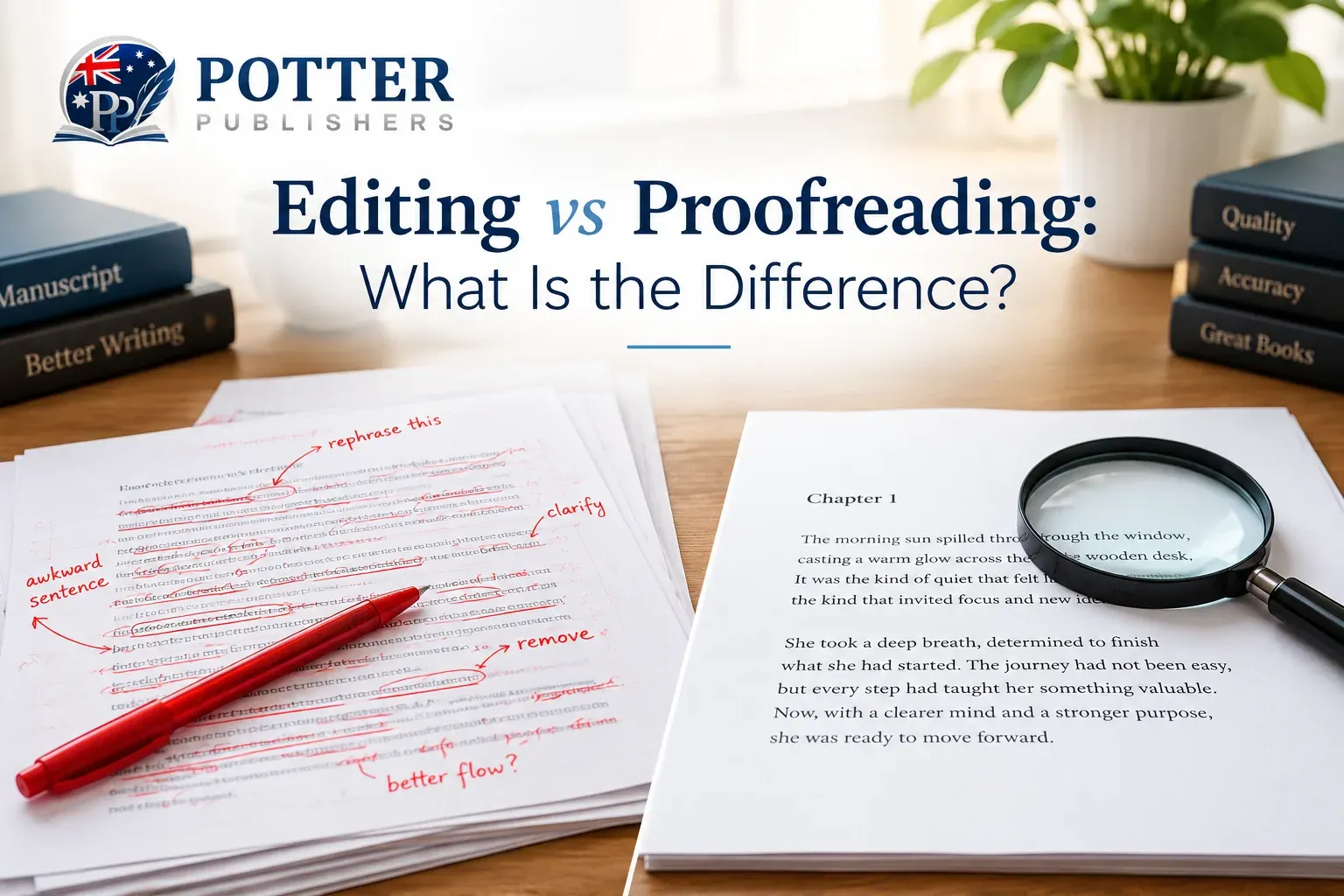
- Editing vs proofreading
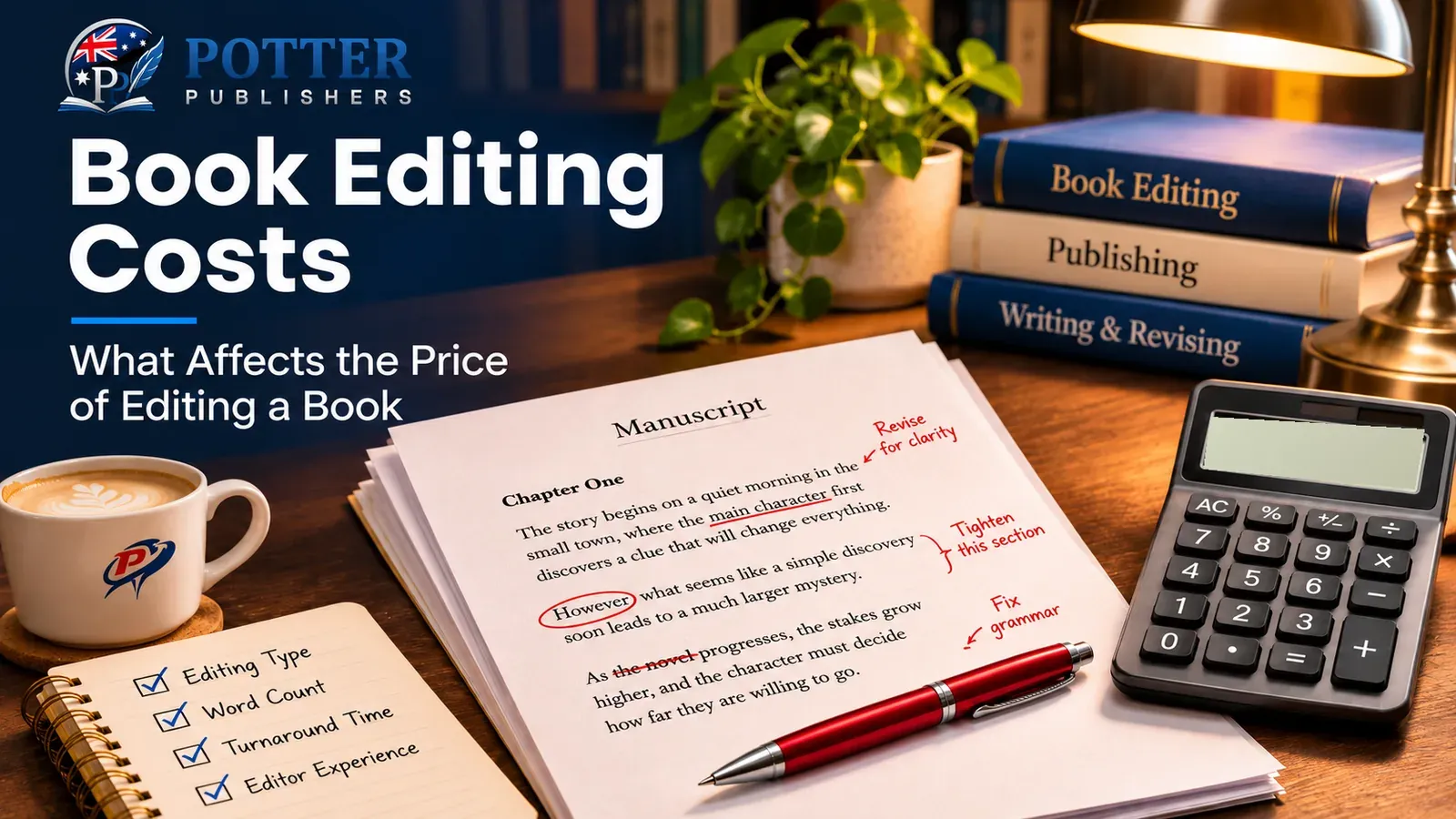
- Book editing costs explained
- How long book editing takes
- A 90-day book publishing roadmap
Questions and next steps
Will a developmental editor rewrite my book? No. They diagnose and advise; you revise.
How long does each take? Developmental edits take longer because the editor works on the whole structure. See how long book editing takes.
Can the same editor do both? Some editors offer both, but many specialise. A fresh copy editor can also catch issues the developmental editor no longer sees.
Is a developmental edit worth it for nonfiction? Yes. Structure and argument matter just as much in nonfiction, especially for business, self-help and narrative nonfiction.
Want an expert view on your draft? Potter Publishers can start with a manuscript assessment and recommend the editing stage that will help most. Talk to our editors.