
Publishing a memoir is part writing project, part emotional journey. This guide walks through the steps from finding your story to holding the finished book.
Memoirs are among the most personal books Potter Publishers helps bring to life. Whether authors write the story themselves or work with our memoir writers, the path to publication follows the same steps, set out below. You can also explore our memoir genre page for an overview.
1. Find the arc, not the whole life
A memoir is not a complete life history; that is an autobiography. A memoir tells one meaningful thread, such as a career, a recovery, a loss or a turnaround. Decide what question your story answers, and build the book around it.
2. Write in scenes
Readers connect with moments, not summaries. Write key events as scenes with detail and dialogue, then reflect on what they meant.
3. Handle real people carefully
Memoirs involve family, friends and others who did not choose to be in a book. Consider changing names or identifying details, portray people fairly, and think about where permission is wise. Take legal advice if you are concerned about defamation or privacy.
4. Edit in stages
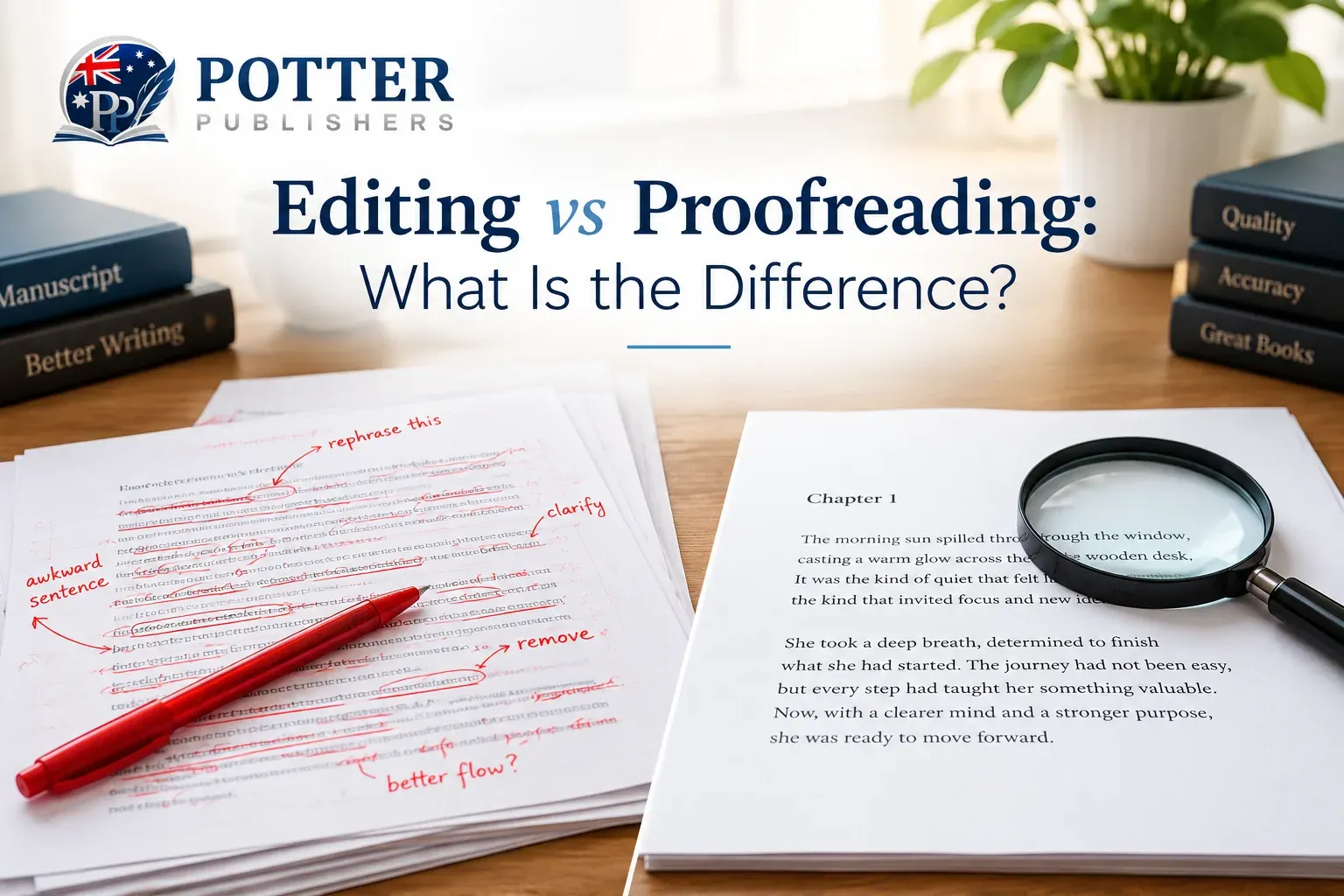
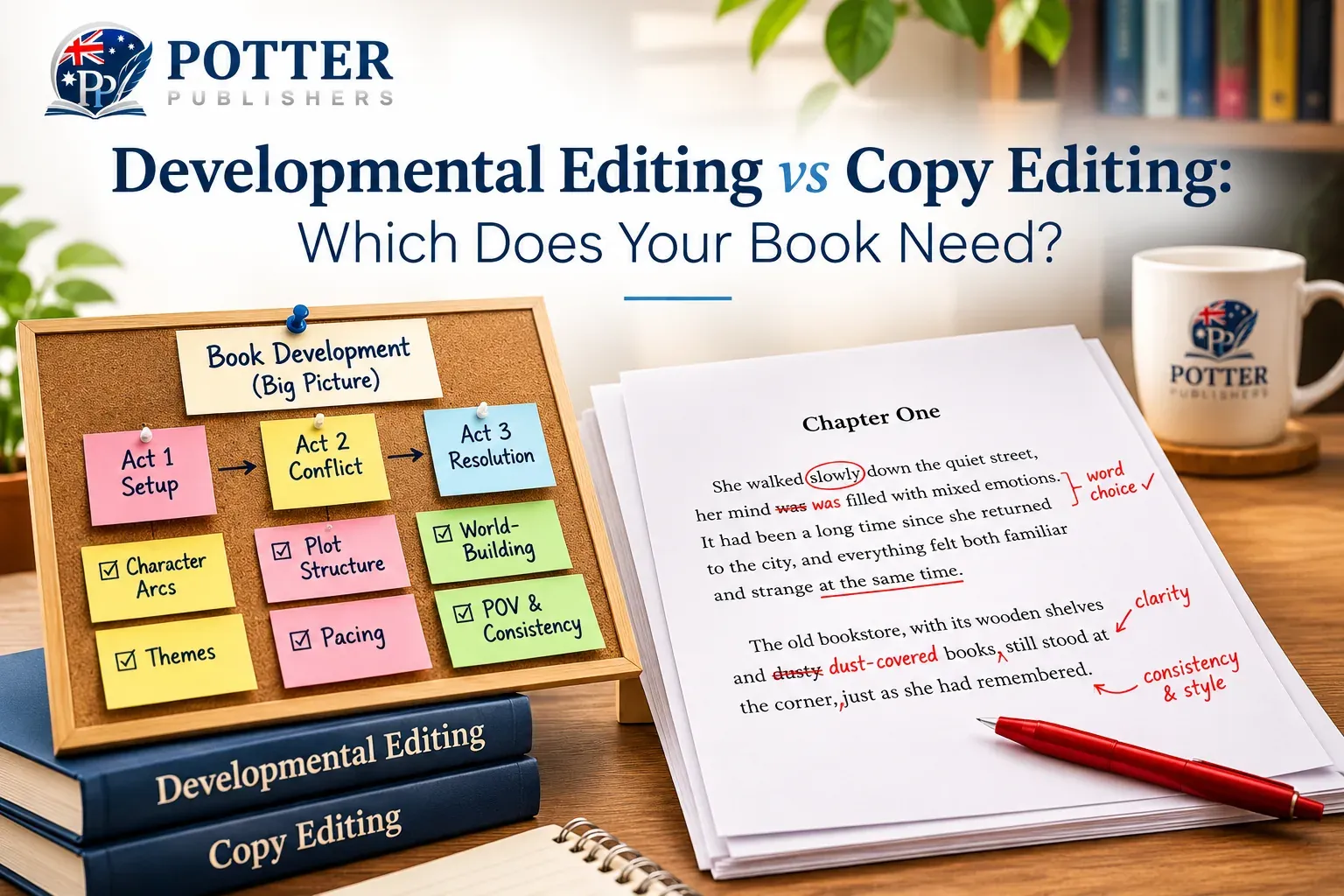
Start with a developmental edit to test the structure and arc, then line and copy editing, and finally a proofread of the formatted book.
5. Design and publish
A memoir cover should signal its tone. Decide on formats, which may include paperback, hardcover, ebook and audiobook, and whether to self-publish or seek a traditional publisher.
Getting the story down
Many memoirists stall before they start because the whole life feels too big. A practical approach is to list the ten moments that most changed you, then ask which of them belong to the story you are telling. Write those scenes first, in any order, and the shape of the book often appears on its own. Others find it easier to talk than to write: recording yourself telling stories, then transcribing and shaping them, is a perfectly good way to draft.
Structuring a memoir
Not every memoir runs in chronological order. Some open at a turning point and then go back to explain how you got there. Some alternate between the present and the past. Some are organised by theme rather than time. Choose the structure that best serves the question at the heart of your story, and keep the reader oriented with clear transitions and dates where they help.
Truth, memory and fairness
Memory is imperfect, and readers understand that. What they expect is emotional honesty and good faith. Where you reconstruct dialogue, aim for the spirit of what was said rather than pretending to a perfect transcript. Where your account of an event differs from someone else's, consider acknowledging it. And remember that the people in your story may read it: writing fairly protects relationships as well as reputations.
Traditional or independent publishing?
Memoirs from authors with a large platform or an exceptional story can attract traditional publishers, usually through an agent. Many memoirists choose to self-publish instead, which keeps control of the content, the timeline and the rights. Some publish primarily for family and a local readership, often in hardcover with photographs. There is no single right answer: decide based on your goals for the book.
Adding photographs and documents
Photographs, letters and documents can make a memoir come alive. Plan where they belong, scan them at good resolution, write short captions, and check you have the right to use any image you did not take yourself. Illustrated interiors need careful formatting for print and ebook.
A memoir publishing checklist
- Define the arc and the question your story answers
- Draft key scenes, then shape the structure
- Review sensitive content, names and permissions
- Developmental edit, then line and copy edit
- Cover design and interior formatting, including photographs
- ISBNs, publishing setup and a final proofread
- A launch plan for the readers you want to reach
Common memoir mistakes
- Trying to include everything. A memoir is stronger when it focuses on one arc and leaves out what does not serve it.
- Summarising instead of showing. Readers feel more when they experience moments as scenes.
- Settling scores. Memoirs written mainly to criticise others rarely land well with readers.
- Skipping reflection. Readers want to know what the experience meant, not only what happened.
- Rushing to publish. Time and distance often reveal what the story is really about.
Choosing your formats
Paperback and ebook suit most memoirs. A hardcover can make sense for books intended as keepsakes or gifts, particularly family memoirs with photographs. An audiobook can be especially effective for memoir, because listeners enjoy hearing a life story told in the author's own voice. Decide which formats matter most to your readers and plan your budget accordingly.
Sharing your memoir with readers
Memoirs often find readers through the communities connected to their themes: groups related to the experience you describe, local history societies, faith communities, professional networks or support organisations. Talks, readings and interviews are natural ways to share the story, and an author website with a short email signup helps you stay in touch with readers who connect with your book.
Writing for family versus a wider audience
If your memoir is mainly for family, you can include more detail, names and private history. If you want to reach readers who do not know you, focus on the universal themes in your story and on writing that works for strangers. Some authors produce both: a family edition with extra photographs and a general edition for wider sale.
How Potter Publishers can help
We offer memoir writing if you want help telling the story, plus editing, cover design and self-publishing support.
Related reading
- Ghostwriting costs
- Self-publishing vs traditional publishing
- Editing vs proofreading
- Book launch checklist
Questions and next steps
Do I need permission to write about family? Not usually to tell your own story, but care and sometimes permission are wise. Legal advice is recommended for sensitive cases.
Can someone write my memoir for me? Yes. A ghostwriter can interview you and write in your voice.
How long should a memoir be? Length varies, but most published memoirs are full-length books. Focus on telling the arc fully rather than hitting a word count.
Should I turn my memoir into an audiobook? Memoir is well suited to audio, and many authors narrate their own. It can be a powerful way to reach listeners.
Ready to share your story? Potter Publishers can help with writing, editing, design and publishing, as much or as little as you need. Tell us about your memoir.