
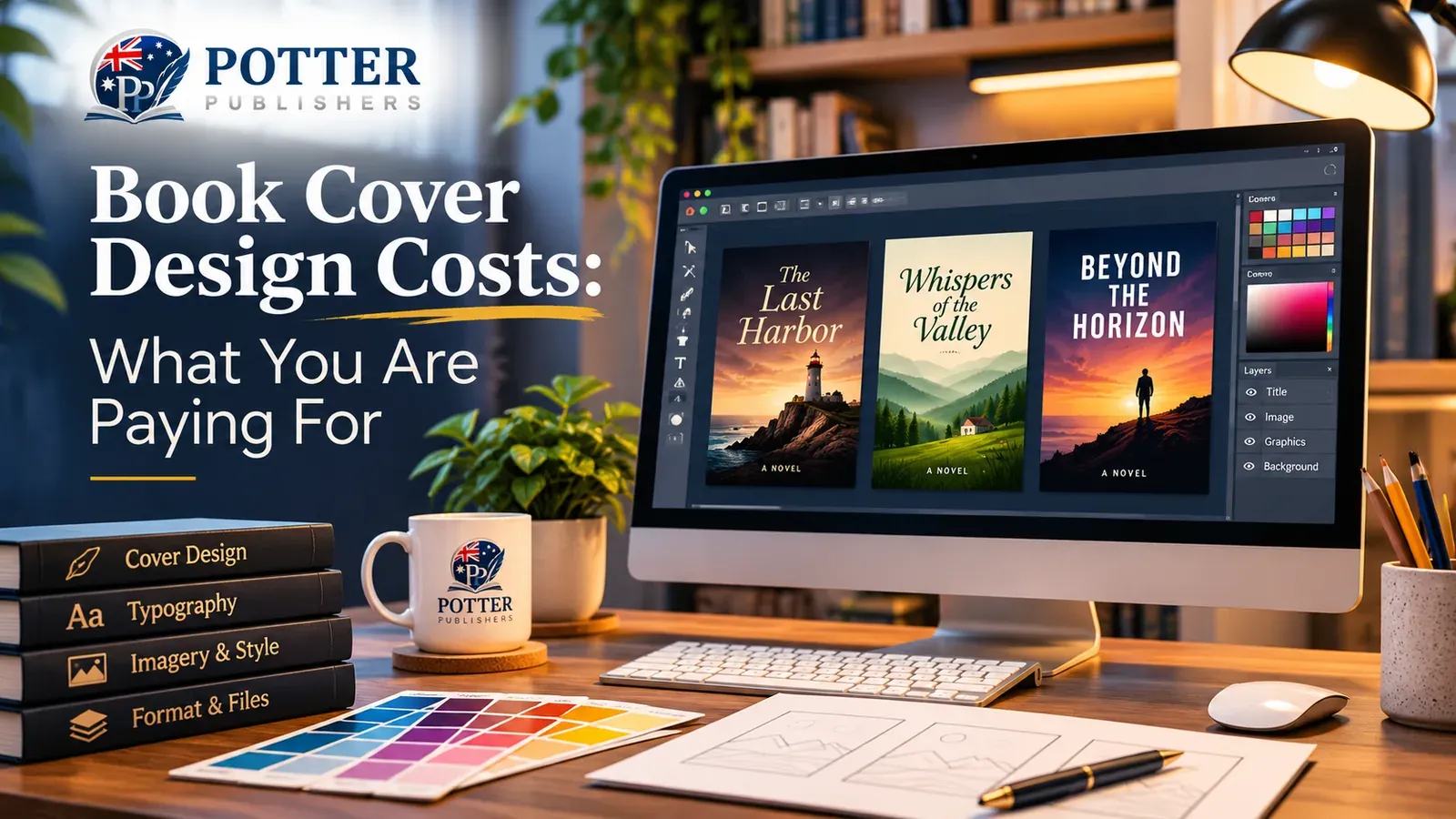
Your cover is your book's first impression, and often the reason a browser clicks or scrolls past. Here is what affects the cost of a professional cover.
Potter Publishers' cover design team designs covers across every genre, from thrillers and romance to memoirs and business books. This guide explains what shapes the cost of a professional cover and how to get the best result from a designer.
What drives the cost
- Stock vs custom artwork. Designs built from licensed stock images cost less than commissioned illustration.
- Concepts and revisions. More initial concepts and revision rounds take more time.
- Formats. An ebook cover is a front only; print needs spine and back cover sized to your page count, and hardcovers need their own files.
- Extras. Marketing graphics, 3D mockups and audiobook covers.
What you are paying for
A professional designer researches your genre, so the cover signals the right kind of book, and makes sure the title is legible at the tiny sizes online stores display. They also prepare technically correct files for each printer.
Image licensing
Make sure every image on your cover is licensed for commercial use on a book. Ask who holds the licence and what it allows.
How to brief a designer
Share your genre, comparable covers you like, a short summary of the book, your title and author name, and the formats you need.
What a cover has to do
Online, most readers first see your cover as a small thumbnail beside many others. In that moment it has to signal the genre, set the tone and make the title readable. On a printed book it also has to work as a physical object: the spine on a shelf, the back cover in someone's hands. A professional cover is designed for all of these situations, which is a large part of what you are paying for.
The design process
A typical process starts with a brief and genre research, moves to one or more initial concepts, then refines the chosen concept through revision rounds. Once the interior is final, the full print cover is built to the printer's template, with the spine sized to your page count and paper. Ebook and audiobook covers are produced at their required dimensions.
Genre conventions are not clichés
Thrillers, romances, fantasy and business books each have recognisable cover styles. Following those conventions is not lazy: it tells readers at a glance that your book is the kind they enjoy. The skill lies in fitting the genre while still standing out. A designer who studies the current bestsellers in your category will make better choices than one working from personal taste alone.
Typography matters as much as imagery
Many weak covers have good images but poor typography: titles that are too small, too thin or placed where they clash with the art. Check any concept at thumbnail size, and in black and white, to see whether the title still reads clearly.
Files you should receive
- A front cover for ebook retailers at the required size
- A full print cover with spine and back, for each print format
- Any marketing graphics included in the quote
- Confirmation of image licences and their terms
Common mistakes
- Designing the cover around a favourite scene rather than the genre's expectations.
- Using images without a commercial licence.
- Finalising the spine before the page count is known.
- Asking for too many elements on one cover.
Writing a good cover brief
The best covers start with a good brief. Include your title, subtitle and author name exactly as they should appear; the genre and subgenre; a short summary of the book's tone and story; a few covers in your genre that you admire and why; and the formats you need. Mention anything the cover must avoid, such as spoilers or imagery that would mislead readers about the content.
Giving useful feedback on concepts
When you review concepts, view them at thumbnail size first, because that is how most readers will see them. Ask whether the genre is obvious at a glance, whether the title is readable, and whether the cover matches the tone of the book. Feedback that explains the reason ("the title gets lost against the sky") is more useful to a designer than a general reaction ("it doesn't feel right").
Covers for every format
An ebook cover is a single front image. A paperback needs a full wrap with spine and back cover, including space for the barcode, a short description and your author details. A hardcover with a dust jacket needs flaps, and a case laminate hardcover needs its own dimensions. Audiobooks use a square cover. Planning all formats from the start means the design can adapt cleanly to each one.
When to redesign a cover
If a book has strong reviews but weak sales, the cover is often the first thing to examine. Genre trends change over time, and a cover that looked current a few years ago may now look dated. A refreshed cover, together with an updated description, can give an existing book a second launch.
Key takeaways
- Cover costs depend on stock versus custom artwork, concepts, revisions and formats.
- A cover must signal the genre and stay readable at thumbnail size.
- Every image must be licensed for commercial use on a book.
- The print spine is finalised after the interior page count is known.
- A refreshed cover can revive a book that is not selling.
Your cover is often the deciding factor in whether a browser looks closer. A clear brief, specific feedback and attention to genre conventions are the best ways to get a cover that works hard for your book.
How Potter Publishers can help
See our book cover design services and illustration services for custom artwork.
Related reading
Questions and next steps
Can I change my cover later? Yes. Many authors refresh covers to boost sales.
Why can't the spine be finalised early? Spine width depends on the final page count and paper.
Should my series have matching covers? Usually yes. A consistent series look helps readers recognise the next book.
Do I own my cover design? That depends on your agreement. Make sure the terms cover how you can use the design, including for marketing.
Want a cover that fits your genre and stands out? Potter Publishers will start with your brief and genre research. Get a cover design quote.